SchspIN

An Actress's Thoughts

24. August 2014
by SchspIN
1 Comment

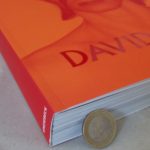
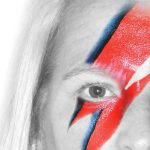
David Bowie is Left-Handed (Gropius Bau 2 years ahead of V & A)

The David Bowie Exhibition comes to Town

Martin Gropius Bau Berlin 2 years ahead of the Victoria & Albert Museum, London

Today’s text it about the David Bowie exhibition that started in London and was shown in Berlin this year, an interview with Bowie from 2000 and a photo story of my visit of the exhibition.

The international exhibition David Bowie was shown in Berlin’s Martin Gropius Bau from May 20 to August 24, 2014. It “retraced the carriere of this exceptional artist, investigated his creative process as a music performer and cultural icon and demonstrated his multifaceted stylistic changes and reinventions. The progressive spirit of Bowie is reflected by the comprehensive audio-visual orchestration of the exhibition, that merges sound and vision to a very special experience“. (a quote from the website of the David Bowie exhibition).

Among other things David Bowie is a collector and diligent chronicler, therefore 60 of his original stage costumes were shown as well as pages from his diaries, exchanges of letters (e.g. with Marlene Dietrich), posters, stage and costume scetches, paintings and and and more more more.

The exhibition was first curated and shown at the Victoria and Albert Museum, London, („The world’s greatest museum of art and design“), from March 23 until August 11, 2013.
The V&A was given unprecedented access to the David Bowie Archive to curate the first international retrospective of the extraordinary career of David Bowie. David Bowie is featured more than 300 objects that include handwritten lyrics, original costumes, fashion, photography, film, music videos, set designs and Bowie’s own instruments.“ (a quote from the website of the David Bowie is-exhibition)

The Berlin version, second station of this “touring exhibition“, is even bigger (and greater!) than the premiere in London, because addition space had been added for exhibits of Bowie’s time in Berlin 1976 until 1978. There he produced his three albums LOW, HEROES and LODGER, he played Paul, the lead in David Hemming’s debut as a director: JUST A GIGOLO, a film that was to be the last of Marlene Dietrich’s films. Incidentally, I met Ingrid Zoré, the costume designer of that film last year, but unfortunately she did not give me Bowie’s phone number.
In this room they played the German version of HEROES, always a treat to hear.

Why the London exhibition did not include the Berlin exhibits is something of a mystery. Last year on January 8, Bowie’s 66th birthday, the song WHERE ARE WE NOW was published on the official website, Bowie’s first new song in 10 years, and what is this song and the video by Tony Oursler about? Well, among other things it is about Berlin.

But of course I don’t want to praise the Berlin exhibition onesidedly, so let’s criticize one thing: No, you cannot talk of barrier-free access, when there is a lift for people in wheelchairs but at the same time the labels for the exhibits are printed in light grey on a darker grey background, in at most half-lit rooms.

David Bowie is a very versatile artist, as musician, composer, writer, actor, mime, painter, stage and costume designer, as well as being a humorous, creative, philosophical, political anti-genderstereotypical person. I can highly recommend to everyone that has not been able to see the exhibition visiting the website of the exhibition, buying the detailed catalogue as well as of course all records and videos by and with David Bowie.

Before sharing my photographic account of my visit to the exhibition I would like to refer to two older interviews with David Bowie. One was performed by Bowie’s second wife Iman for the magazine Bust in the autumn of 2000 (here is a transcript). Among other things it deals with Bowie’s attitude towards feminism, gender stereotype, the song BOYS KEEP SWINGING which includes the ironic line „Nothing stands in your way When you’re a boy„, machismo and relationships.

Bowie’s answer to the question “What does the word ‚feminism‘ mean to you?“ was: „In general, I suppose, I find it intensely offensive to see women treated as chattel or appendages. I cannot think of a situation where a woman could not do an equal if not better job than a man. Possibly, a situation requiring only brute strength may be the exception, but here again, a woman would be smart enough to organize the right person for the job. In that singular case, probably a man.“
The second interview was done backstage in 2006, when David Bowie was guest on Ricky Gervais’ sitcom EXTRAS: here is the video (1:45 min).

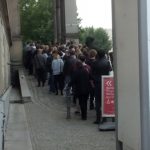
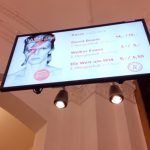
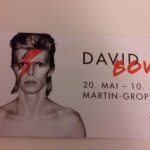
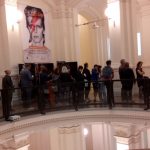
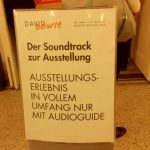
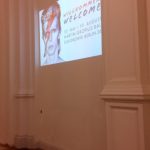
I have been a Bowie fan for decades (and own a number of his records still in the original vinyl versions), also some years ago I moved to Berlin and now live in the vicinity of the Martin Gropius Bau, so there was never any doubt that I would visit the exhibition right away. After an extended phase of excited anticipation I finally went to see it last Thursday, 4 days before the end of ist 3 months run:
D

14. August 2014
by SchspIN
4 Comments

It’s a Men’s Radio World?

It’s a Men’s Radio World? (for public Deutschlandradio Kultur)

Twice already I have written about a German live radio show on Deutschlandradio Kultur that is broadcast every saturday between 9 and 11, called IM GESPRÄCH (Conversations). I investigated the topics and the shares of women and men among the guests. The show has a topic, a host and one or two experts as guests. Also the audience can participate in the discussion by phone or email. (Listen to the Radio and Review 2013: Talk on the Radio).

Today I am evaluationg the shows of the first six months of 2014 and comparing them with the two half-years of 2013. The results show that the share of women among the experts invited to the programme has continued declining. The family that listens to this publically financed programme over their satuday morning’s breakfast are presented with a world of male experts, with hardly any female experts, no matter what the topic.

1st half 2013: ratio 1 : 1,6
2nd half 2013: ratio 1 : 3
1st half 2014: ratio 1 : 4,5 (8 women, 36 men).

Radio_2014a_en

Here are the 17 (out of 26) shows of the first half of 2014 without female experts. The shows that only had one guest are marked by a *, the others had two guests (I prefer programmes with two guests, that way you get different opinions or approaches to a topic, but that is not the question right now of course):

  • * Physics – in the lecture hall with 007 and Star Trek
  • * Use and harm of vitamine supplements
  • Escort for the final path – euthanasia
  • Films you should have seen
  • Losing the ground beneath the feet – fear of social descent
  • Gentle tourism – an illusion?
  • How has reproductive medicine changed our view on having babies?
  • * The pollen are out again – allergies
  • * Is Germany botching the energy transition?
  • * Heat, sand and ice – deserts
  • * At eye level with the doctor – how to find the right treatment
  • * Germany’s birds
  • * The art of composure – how to deal with stress
  • Experts say: everybody can play music
  • Who are the winners and who are the losers of TTIP?
  • How can cyclist, motorists and pedestrians get along in a fair manner?
  • How much justice can be found in the new pension deal?

— In the German version of this text I wrote a little about the phrasing of the titles, of which quite a few are men-focussed and suggest some more neutral phrasings, but this is not something that translates into English. —

After the bad results of last year’s survey into this show – a third female and two thirds male guests I spoke with Susanne Schröder of the Department Current Culture / Radiofeuilleton at Deutschlandradio Kultur. She said that they were aware of this lack of female experts but that is was very difficult to find women that were prepared to participate in a two hour live radio show with audience involvement on a Saturday morning. Why is this so? Do working mothers want to give their families undivided attention on a week-end? Do working wives need the week-end to clean the house? Are women have less confident and will say yes to a lecture but no to a live discussion?

I don’t know. But in the face of the really low share of women among the guests so far in 2014 I don’t believe this can only be due to the reasons given by Frau Schröder, rather I should think that maybe the way that they are looking for experts for the show could and should be improved. I started a small incidental test in finding female experts for some of the all-male topics from 2014. I only used a simple search engine to find people or called ,matching’ institutions directly. Also I used the new German database Speakerinnen.org which assembles women experts for conferences etc.

— in the German version I then listed a number of female experts for various topics from shows in 2014 that would be available for this radio format. —

Conclusion:

We have not reached sex equality in our society yet, but that is no reason not to talk with or about women. On the contrary! The end of males-only guest lists for discussions would not be superficial cosmetics, but they would lead to a gain in content for the programme. Talking about films without ignoring films by female drectors, talking about social decline and mention the great threat especially for women to be struck by povery in old age, talking about reproductive medicine and address the pressure on young women from certain population groups to have children, talking about terminal care and discuss the fact that this is a woman’s job in our society, develop ideas for more attractive physics education with a man AND a woman to prevent phyiscs from being presented as a male domain to the next generation as well, and and and.

I wasn’t under the impression that it is extremely difficult or even impossible to find female experts that are interested in and interesting for the radio show, and I hope that we will sea a much higher share of women among the guests in the second half of the year. How about 60 % ?

Incidentally, five of the six shows in the 2nd half of 2014 so far were men only.

4. August 2014
by SchspIN
Comments Off on Leseempfehlung: “Der Unterschied als Aufmerksamkeitsgarant?” – Recommended Reading: “Difference as an Attention Guarantor?”

Leseempfehlung: “Der Unterschied als Aufmerksamkeitsgarant?” – Recommended Reading: “Difference as an Attention Guarantor?”

Gerade habe ich auf der Seite Leidmedien den Text Krimi und Inklusion – Behinderung als Spannungselement? von Anne Haage, wissenschaftlicher Mitarbeiterin an der Fakultät für Rehabilitationswissenschaften der TU Dortmund, entdeckt.  Haage  bespricht eine 16-seitige Studie von Prof. Ingo Bosse (ebenfalls TU Dortmund)  über “Behinderung in den Krimiserien Tatort und Polizeiruf 110“, für die er alle Erstausstrahlungen in diesen Reihen von 1999 bis 2009 auswertete.
Anne Haages Text ist eine gute Zusammenfassung (hier noch mal der Text), der vollständige Fachbeitrag von Ingo Bosse ist im Text verlinkt (und findet sich hier). Beides sehr lesenswerte Artikel.
Leidmedien.de – Über Menschen mit Behinderungen berichten ist ein Projekt der Sozialhelden Berlin.

Unfortunately there is no real English Version today, since I am recommending another German text (by Anne Haage) on characters with disabilities in German cop and crime TV shows and their contribution to the suspense of the plots. Anne Haage is describing an investigation by Prof. Ingo Bosse (Technical University of Dortmund), in which he evaluated all TATORTE and POLIZEIRUF 110’s between 1999 and 2009. To quote from the English summary at the beginning of his German article Difference as an Attention Guarantor:
Disability is a topic of high importance in both series and is shown in a multi-facetted way. Although the disabled figures show a more positive characterization, there is no one-sided ascription. Nevertheless the narrations deal with stereotypes, but they are particularly exposed as those.”

14. July 2014
by SchspIN
10 Comments

Film: Frauengewerke, Männergewerke? – Filmcrafts: Some with Women, Some with Men?

English Version follows German.

Gibt es das wirklich, Frauengewerke, Männergewerke?

Heute geht es um 32 Teampositionen am Filmset und 2 Positionen vor der Kamera. Anhand der Datenbankeinträge von Crew United werden Frauen– und Männeranteile in den unterschiedlichen Bereichen einer Filmproduktion ausgewertet (8 Grafiken in einer Bildergalerie am Ende des Textes).

Crew United

Crew united entstand 1996 und wurde 5 Jahre später als crew united, Lutz und Zenglein GbR gegründet, mit dem Ziel, „eine Internetplattform zu schaffen, die Freelancern ermöglicht, sich und Ihre Qualifikationen darzustellen und so potentielle Arbeitgeber auf sich aufmerksam zu machen.“ Daneben bietet Crew United aber auch eine umfassende Datenbank für Film- und Fernsehproduktionen mit deutscher Beteiligung, in deutscher und englischer Sprache.CrewUtdDas Logo – Kopf mit Käppi und Hand mit Megaphon – entwickelte der Illustrator und Grafiker Robert Oschließ  1997. Zum Relaunch 2003 wurde es von Jana Cerno komplett überarbeitet.

Auf Crew United-Einträge greife ich oft zurück, wenn ich Film- und Fernsehproduktionen vor und hinter der Kamera auswerte, da dort fast alle aktuellen Projekte aufgenommen sind. Ein Nachteil: die Dateneinträge beruhen auf Freiwilligkeit, was zur Folge hat, dass Stab- und Besetzungslisten unterschiedlich ausführlich erfasst sind. Auch die [Weiterlesen – Read On]

23. June 2014
by SchspIN
2 Comments

Die Sache mit der Bavaria und den Schuhen – Write a Blog and Ride a Porsche

English Version follows German.

Eine persönliche Geschichte vom Laufen

Der heutige Blogtext ist eine Antwort auf die mehrfach geäußerte Bitte „Schreib doch auch mal was Persönliches!“.
Na gut, ich versuch’s mal.

Vor ein paar Wochen hatte ich einen Termin in der Besetzungsabteilung der Bavaria Fernsehproduktion in München bei Gwendolyn Clayton. Spontan gesellte sich Clayton’s Castingkollegin Silke Klug-Bader dazu.

Bavaria Fernsehproduktion. München. Foto: SchspIN

Bavaria Fernsehproduktion. München. Foto: SchspIN

Es wurde ein langes, produktives und kurzweiliges Dreiergespräch, in dem wir [Weiterlesen – Read On]

26. May 2014
by SchspIN
4 Comments

Kunst oder Kommerz 2013: Vor der Kamera – Give me Art, Give me Money 2013: In Front of the Camera

English Version follows German.

Kunst oder Kommerz 2013: Vor der Kamera

Vor ein paar Wochen hatte ich es angekündigt: heute geht es um Besetzungen, d.h. um Frauen und Männer vor der Kamera in kommerziell erfolgreichen bzw. preiswürdigen deutschen Kino- und Fernsehproduktionen. Hierfür untersuchte ich vier Gruppen von Filmen aus dem Jahr 2013: Die Top 20 Kassenerfolge im Kino, die 20 Nominierungen zum Deutschen Filmpreis, die Top 20 Fernsehfilme mit den höchsten Quotenerfolge TV, und die 17 Nominierungen zum Grimmepreis, also insgesamt 97 Filme.
Die Filmtitel – nebst Regie und Produktionsfirmen – gibt es hier: Der 4 Filmgruppen-Vergleich 2013.

Fragestellung:

Ausgewertet habe ich die Frauen– und Männeranteile für den Gesamtcast sowie die Haupt-, Neben- und erstgenannten Rollen. Außerdem habe ich den Rollenquozienten [Weiterlesen – Read On]

19. May 2014
by SchspIN
8 Comments

What kind of a Title is THAT?

What Kind of a Title is THAT?

In my last blog text Rights, not Privileges! It’s that easy. I criticized the ,German’ title of the British film MADE IN DAGENHAM, which was WE WANT SEX, and half jokingly I suggested DIE AUTOFRAUEN VON DAGENHAM (the car women from Dagenham) as an alternative. This was followed by a short trialogue online:

twitter_FilmnamenOf course it is not easy translating titles that contain a regional reference (as was the case for MADE IN DAGENHAM), or that contain a pun or figure of speech (as is the case with DER BEWEGTE MANN or A LEAGUGE OF THEIR OWN)

But then there are film titles that are altered without much need for that, for example – another film with cars – as with DIE DREI VON DER TANKSTELLE (The Three from the Filling Station). In Sweden it is called KÄRLEK OCH BENSIN (Love and Petrol, which is quite funny really) and in France LE CHEMIN DU PARADIS (The Road to Paradise?).

So let’s start collecting!
What titles do you know that were translated in a weird way? And what are your suggestions for better translations?
I’ll begin.

  • MADE IN DAGENHAM. Director Nigel Cole, UK 2010
  • D and I: WE WANT SEX
  • F: WE WANT SEX EQUALITY
  • S: FLICKORNA I DAGENHAM (Girls in Dagenham)
  •  COMME UNE IMAGE. Director Agnes Jaoui, F 2004
  • D: SCHAU MICH AN! (Look at me)
  • UK: LOOK AT ME
  • P und NL : COMME UNE IMAGE
  • I: COSI FAN TUTTI (Thus Do They All)*
  • Schweden: SE MIG (See Me)
  •  * interesting! Mozart’s opera is called „Cosi fan tutte“ – so in that case the tutte / all refers to females. In this case the tutti stands for males (I think)
  • The French expression „sage comme une image“, translates to being very good. So before attempting a new translation I would consult with the film’s authors Jaoui and Bacri.
  •  DIE DREI VON DER TANKSTELLE. Director Wilhelm Thiele. D 1930
  • UK: THE THREE FROM THE FILLING STATION
  • F: LE CHEMIN DU PARADIS (The Road to Paradise?)
  • I: LA SIRENETTA DELL’AUTOSTRADA (The little Siren from the Highway?)
  • S: KÄRLEK OCH BENSIN (Love and Petrol)
  •  A LEAGUE OF THEIR OWN. Director Penny Marshall. USA 1992
  • D: EINE KLASSE FÜR SICH(A class of its own)
  • J: プリティ・リーグ (puriti li-gu)
  • I RAGAZZE VINCENTI (The victorious Girls?)
  • S: TJEJLIGAN (The Girl Gang)
  • (a comment on the translation„Tjejligan is a tricky word to translate. “Tjej” is a word for girl. “gan” is a kind of a gang, usually used when it comes to criminals. So “the Girl gang”, but in a much more badass way.“ Tack så mycket, Julia!)
  • DER BEWEGTE MANN. Director Sönke Wortmann, D 1994
  • (Here we go, this IS difficult. Literally it means „the man in motion“ or „the emotional man“ but then it’s a play of words, because it also contains ,emancipation movement’ as a second meaning)
  • UK: THE MOST DESIRED MAN
  • USA: MAYBE… MAYBE NOT
  • E: EL HOMBRE DESEADO (The desired Man, The Dream Man?)
  • F : LES NOUVEAUX MECS (The New Blokes) – the French sounds trés cool!
  • MEZCZYZNA, PRZEDMIOT POZADANIA (Man, Object of Desire)
  • (Dziękuję bardzo, Julita! – and the correct writing is: Mężczyzna, przedmiot pożądania. And it’s man as in male person not as in human being)
  •  東京物語 TOKYO MONOGATARI (Tokyo Tale). Director Yasujirou Ozu, J 1953
  • S : FÖRÄLDRARNA (Parents)
  • UK: TOKYO STORY
  • E: CUENTOS DE TOKIO
  • F: VOYAGE À TOKYO
  • D: DIE REISE NACH TOKYO (The Journey to Tokyo)
  • NL: TOKYO MONOGATARI
  • FIN: ENSIMMÄINEN MATKA (First Journey)
  •  BANDE DE FILLES. (Girls Gang) Director Celine Sciamma, F 2014
  • USA: GIRLHOOD
  • D: ?
  • S: ?
  • (The film just premiered at Cannes, as far as I know it does not have a German title yet, so there’s still room for suggestions. And also I am wondering what the Swedish title will be since TJEJLIGAN is already taken.)
  •  GRAVITY. Director Alfonso Cuarón, USA UK 2013
  • D, DK, E, F, FIN, NL: GRAVITY
  • J:   ゼロ・グラビティ zero gurabiti (zero gravity)
  • TR: YRçEKIMI (gravity)
  • P: GRAVIDADE
  • (Yes, there are films that use the same title in a lot of countries.)

And now it’s your turn!
Which translations of titles did you like a lot or found really badly done?

13. May 2014
by SchspIN
3 Comments

Sewing Machines! We need Sewing Machines! – Rights, not Privileges! It’s that easy.

Two Films about Sewing Women

Sewing Machines! We need Sewing Machines! – Rights, not Privileges! It’s that easy.

Today’s focus is on two films about sewing women that are based on historical people and actual incidents. The films are no documentaries but fictionalized so of course a lot of the plot has been made up. But there are distinct differences: In Film A the characters and the depicted time gain greater depths by this and in Film B the leading lady and her achievements are reduced.

MADE IN DAGENHAM (UK 2010, German title : WE WANT SEX) tells the story of 187 women sewing machinists at Britain’s largest automobile factory / Dagenham who in 1968 protested successfully against being regraded as unskilled and who fought for equal pay. Two years later this industrial action led to the Equal Pay Act.

The TV movie MARGARETE STEIFF (D 2005) is about the life of south German sewer of soft toys and company owner Margarete Steiff (1847-1909). The film starts when she is 10 years old and ends with the 1903 toy fair in Leipzig where Steiff had her international breakthrough with „55 PB“, the world’s first movable toy bear (,Teddy Bear’).

Made in Dagenham. UK 2010

“I got brought up by my mum, me and me brothers. She worked all her life, and she paid my aunt Lil to take care of us during the day. And it was hard. Especially as she was getting less than half what the blokes in the factory was getting, for doing the same work. But there was never any question that it could be any different. Not for her. Someone has got to stop these exploiting bastards getting away with what they’ve been doing for years.”

This, in the film MADE IN DAGENHAM, is the answer of foreman / union steward Albert Passingham (played by the great, sadly recently deceased, Bob Hoskins) to the question why he is so passionate about the sewing machinists’ industrial dispute at Ford Dagenham car plant.

The film takes place In 1968, when 55,000 male and 187 female workers were employed at the car plant. The women sewing machinists produced the covers for the car seats. When a regrading of the workers led to the women becoming officially unskilled and at the same time receiving less pay, even though their work was qualified and they had to account for two years’ sewing experience, they called for an immediate stoppage and demanded equal grading and equal pay with the male colleagues, this a first in Britain’s history. This stoppage that resulted in a longer strike and industrial action, some at times reluctant union officials, who wanted to put the women’s demands to the end of the line, unsolidary workers, the miserable work place, the meeting with Labour Secretary of State for Employment Barbara Castle, as well as the finally negociated result – the machinists were regraded as semi-skilled and their wages were raised to 92 % of the men’s – all this is true to the facts.

Quite impressive! It’s always nice when a Goliath (in this story a big, capitalistic enterprise) is brought to his knees by a clever David, or rather Davina. And if in the course of this action the colleagues and husbands of the Davinas learn something new it’s a bonus.

In Nigel Cole’s social comedy all protagonists with the exception of Secretary of State for Employment Barbara Castle (Miranda Richardson) are made up and along with them their sub stories: we get to know Rita and her family and their financial problems and her son who is caned by his school teacher, shop steward Connie (Geraldine James) whose elderly husband is a traumatized war veteran, Lisa (Rosamund Pike), a historian with a University degree, who is in the role of housewife and mother as well as ornamental wife of the Ford factory boss (her son is being caned at school as well, she starts a petition which leads to his dismissal) and many more stories of private and professional dreams of the machinists, wrapped in the fashion, hair-styles and music of the changing society of the swinging sixties. I talked to representatives of trade union TUC and the library collection of trade unions’ history at London University who both emphased the fact that the REAL Dagenham ladies had looked completely different, far less glamouros for a start. The machinists’ leader Rita O’Grady did not exist, however the real Rose Boland can be called the driving force, „but then it’s never just one person, is it“.

Reproduced by kind permission of the Financial Times

Reproduced by kind permission of the Financial Times

Originally the film’s titel was to be WE WANT SEX, based on a true anecdote: the machinists had painted a banner with the phrase „We want sex equality“, however they did not revealed the whole length of the banner, so the fourth word was missing. However the title was changed to MADE IN DAGENHAM, which is a wise decision since the other title would have led viewers in a direction which had nothing to do with unions’ history or rights for women. Unfortunately they chose the exact „we want sex“ title when the film came to German cinemas, in a German dubbed version. This is unfortunate for the above reason and also because the play of words does not make any sense in German. I have no idea why they did not choose a German title, maybe along the lines of „Die Autofrauen von Dagenham“ („The Car Women of Dagenham“).

Finally I would like to point out certain parellels between machinists’ leader O’Grady and Secretary of State Castle („We ain’t politicians, we’re working women – and so are you“), who even own the same cheap dress from Brenninkmeijer. Both had to fight against male prejudices and paternalism, both had to find new ways. „That risk you were talking about, I am going to have to take it“, as Barbara Castle says to a US Ford representative who had threatened to move the car plant to another country if the demands of the women were met. I have no idea if this is a historical fact, but in fiction it is of course very nice to see politicians stand up against a big private enterprise.

MADE IN DAGENHAM. UK 2010. Director Nigel Cole, Script William Ivory. Casting Director Lucy Bevan. With Sally Hawkins, Bob Hoskins, Miranda Richardson, Geraldine James, Rosamund Pike, Andrea Riesborough, Jaime Winstone and others

Margarete Steiff. D 2005

A cripple will never find a husband, let alone find work.“

This is what mother Steiff (played by Suzanne von Borsody) says to 10 year old Margarete in the film.

Margarete Steiff (1847-1909) suffered from polio from the age of two, both legs and the right arm and hand were affected and nearly completely immobile. She learns to write with her left hand, trains to become a sewer, buys the wirst sewing machine in her town (Giengen / Brenz, in the south of Germany), founds a felt clothes shop, invents high class soft toys, the Steiff animals, and turns her family business into a global player of the toy industry. When I saw the film for the first time some years ago I was really surprised, having owned Steiff animals all my live I did not know that they were named after their inventor. I thought they were called Steiff animals because they were stiff (German: steif) and firm. Making a biographical movie is not easy, especially if it spans over nearly 50 years as in this case. The film starts in Margarete’s childhood (there she is played by Annika Luksch) and ends at the Leipzig toy fair of 1903, when Steiff was 56 years old. The actress playing the grown-up, Heike Makatsch, was 33 years old at the time of shooting. On the next photo we see Margarete Steiff in 1895, as a 48 years old.

Margarete Steiff and Employees. Approx. 1895. Photo: Margarete Steiff GmbH.

Margarete Steiff and Employees. Approx. 1895. Photo: Margarete Steiff GmbH.

Steiff’s biography is really impressive. A women with a poor background and a disability, a woman in the 19th century, when education and job opportunities were even more different for women and men than today. Her motto „Only the best is good enough for our children“ is quite remarkable in times when children were caned and beaten legally in schools and families. Of course (and unfortunately) the story was changed a bit. In the film Margarete is younger, thinner, more beautiful. But first and foremost: a love story involving travelling salesman Julius is made up. Why?

I was talking to someone from Steiff’s public relations staff who said that „this is what people want to watch, so this way the film will get a larger audience.“ It’s not that the love story isn’t well done, it is, and the scene where Margarete and Julius (Hary Prinz) meet for the first time on a train is quite charming, there is a good chemistry between the two of them and the dramatic arc first meeting – separation – surprise reunion – falling in love – separation – reunion – break-up works quite well. Add to that jelous younger brother Fritz (played by 4,5 years older Felix Eitner) and there you have real personal drama. But it is quite weird that this made-up love-story, or rather Julius, is triggering all Margarete’s crucial actions as well as causing the majority of turning points in this film story.

In the film Margarete met Julius on the train as she was travelling to Vienna to get a treatment for her legs.

  • J: Machines are the future.
  • M: Where I come from we do everything with our hands..
  • J: This has got to change. machines make everything in life much easier. For you as well!
  • M: But machines are for men!
  • J: I am trying especially to make the lives of women easier, with sewing machines for example.

Months later he comes and visits her in Giengen, he provides her first sewing machine and also the fabric for her first fancy dress which brings her big success as a dressmaker. They get closer, and kiss for the first time while swimming in a river. Julius helps her start her business and when he wants to leave after a while she says” I need you here, you are the only one who knows about machines, who knows how to oil the hand wheel (…) Stay! Julius, please!” He stays for the time being. It’s time to buy the second sewing machine. Julius leaves and does not return for days. She flipps through a fashion magazine from Vienna that of course Julius had given her. In it she finds a drawing of an elefant. Since she can’t sleep for nights on end she sews and sews and sews her “Filzelefäntles” (velt elephants), that were originally designed as pin cussions, but end up becoming the first soft children’s toy. Julius returns and bringst the second sewing machine, but in the meantime he had fallen in love with Margarete’s best friend and leaves for Salzburg with her. Margarete stops talking to her brother (because he didn’t warn her) and plunges herself into work, to forget all her sorrows, so much so, that after a short time – there is no statement on dates – she is head of a large factory with dozens of sewers. After Julius is gone only 15 minutes of this film remain, Steiff now has sales difficulties after many successful years, she reconciles with her brother and together with him invents the toy bear who is her saviour when 3,000 are ordered.

Yes, the basic facts are correct and as I said it is perfectly alright to make things up. But why the love story? To show that she is a proper woman after all? And why this Julius? To show that she would not have been able to think of all the things that eventually led to the company Margarete Steiff GmbH? Who is responsible for this decision? Scriptwriters Susanne Beck and Thomas Eifler? The TV producer? The production company?

Stories about male pioneers are not sexed-up or deflected by love stories. You may have a film on the race to the south pole, alternatively from Amundsen’s or Scott’s perspective, and there will be no female in the plot. Well, maybe Mrs. Scott (“my widow”) as recipient of Scott’s final letter before freezing to death, or maybe Amundsen’s faithful female sledge dog. When there are women they are helpful, but not significant. They make tea or contact to a financer (Hedwig Ehrlich in DR. EHRLICH’s MAGIC BULLET). But they are not the source of the men’s achievement.

But the story of pioneer Margarete Steiff is not enough for a film in its own right. Why? Because market research has revealed that a story with a heroine needs a love story? It does not matter if true or invented, happy or sad, as long as there is a male love interest? Because this is allegedly what women wnat, and men don’t watch films anyway that center around a woman?

MARGARETE STEIFF. TV movie 2005. Director: Xaver Schwarzenberger. Script: Susanne Beck, Thomas Eifler. Casting Director: Birgit Geier. With Heike Makatsch, Felix Eitner, Hary Prinz, Suzanne von Borsody, Herbert Knaup, Harald Krassnitzer, Bernadette Heerwagen, Annika Luksch u.a.

Comparing the formal frame

MADE IN DAGENHAM has explanatory titles at the beginning, like we know from other „based on a true story“- films: „In 1968 there were 55,000 men employed at Ford’s Dagenham Factory (new title) and 187 women.“, and we see archive material, old Ford promotional films from the 1960s. Even more impressive I find the end title section, in a split screen we see the usual credits, but in the other half we see the real Dagenham machinists (and Barbara Castle) back in 1968, and we see them in the 21st century, cheerfully talking about those days. Just before that a title „Two years later in May 1970 the Equal Pay Act became Law. Similar legislation quickly followed in most industrial countries across the world.” By the way, what is the situation on equal pay in the film business, behind and in front of the camera? Do women and men get the same money for the same work? Well, that is a topic for another day.

The Steiff movie passes on additional text titles at the beginning and the end. This is unfortunately, I think something like “Four years later in 1907 974.000 teddy bears were manufactured. Margarete Steiff died in 1909 from pneumonia. Her three nephews took over the management. Until today the head office of Steiff Retail GmbH remains in Giengen / Brenz.” would have been quite informative.

Despite all criticism I strongly recommend watching both films, not least because they depict inspiring stories of female sewers who through their work and their guts have considerably changed the course of history, not ony for themselves, but for many who followed.

In any case, I have just gone and bought a sewing machine for a start.

A Steiff animal and a sewing machine.. Foto: SchspIN

A Steiff animal and a sewing machine. Foto: SchspIN

1. May 2014
by SchspIN
2 Comments

Der 4 Filmgruppen-Vergleich 2013 – Comparing 4 Groups of Films from 2013

English Version follows German.

Der 4 Filmgruppen-Vergleich 2013

Vor ungefähr einem Jahr habe ich unter dem Titel „Kunst und Kommerz, wo arbeiten die Filmfrauen“ insgesamt 68 Filme aus dem Jahr 2012 gegenübergestellt:

  • die Gesamtheit der für den Deutschen Filmpreis 2013 in allen Kategorien nominierten Kinofilme aus dem Jahr 2012, das sind 17
  •  die Gesamtheit der für den Grimmepreis in allen Kategorien im Bereich Fiktion (ohne Serien) nominierten Fernsehproduktionen – das sind auch wieder 17
  • die Top 17 an den deutschen Kinokassen 2012 (deutsche Filme)
  • die Top 17 der 2012 TV-Charts, d.h. die deutschen fiktionalen Formate mit den höchsten Quoten

Diese 4 x 17 Filme hatte ich in zwei Folgen untersucht: [Weiterlesen – Read On]

19. April 2014
by SchspIN
Comments Off on Frohe Ostern – SchspIN in Motion – Happy Easter

Frohe Ostern – SchspIN in Motion – Happy Easter

English Version follows German.

Statt Ostereiern eine Vorankündigung:
Zur Zeit ist ein audiovisueller Ableger von SchspIN in Vorbereitung,
die Reihe „SchspIN in Motion“.
Demnächst mehr an dieser Stelle.

Sonnige Grüße!

SchspIN wünscht Frohe Ostern - Happy Easter by SchspIN
SchspIN wünscht Frohe Ostern – Happy Easter by SchspIN

English Version

In place of easter eggs here’s an announcement:
At the moment an audiovisual branch of SchspIN is being prepared,
called “SchspIN in Motion”.
Stay tuned to this blog to find out more.

Sunny greetings!